
Curettage
Curettage is an effective skin cancer treatment using precise scraping and electrocautery. At The Skin Surgery Center, our dermatologists provide expert, personalized care.
Curettage is an effective skin cancer treatment using precise scraping and electrocautery. At The Skin Surgery Center, our dermatologists provide expert, personalized care.
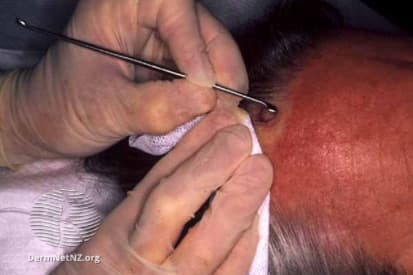
Curettage is a highly effective skin cancer treatment that involves the meticulous scraping off of abnormal lesions using a sharp, oval-shaped instrument known as a curette. This precise procedure is frequently employed to address various types of skin cancer, including basal cell carcinoma and squamous cell carcinoma. Following the curettage, a dermatologist will utilize electrocautery to burn away any remaining abnormal cells, ensuring comprehensive treatment and reducing the likelihood of recurrence. The outcomes of curettage for patients are highly favorable. This minimally invasive procedure typically results in minimal scarring and a quick recovery time. Patients often experience minimal discomfort during and after the procedure, with most returning to their daily activities shortly thereafter. Curettage is especially beneficial for those with smaller, superficial skin cancers and offers a reliable, effective solution for eliminating cancerous cells while preserving healthy surrounding tissue. For optimal results and personalized care, consult with our experienced dermatologists who will tailor the treatment to your specific needs, ensuring the best possible outcome for your skin health.
Benefits of Curettage
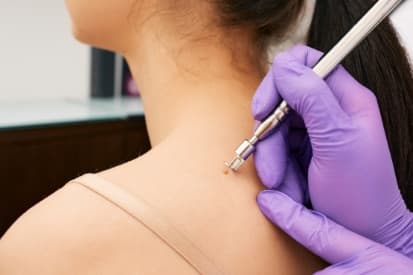
Benign Lesion Removal: Effectively removes benign skin issues like warts and cysts for cosmetic improvement.
Diagnostic Tool: Provides a sample for accurate diagnosis, aiding in identifying skin conditions.
Skin Cancer Treatment: Minimally invasive option for superficial skin cancers, offering simplicity and effectiveness resulting in minimal scarring.
Outpatient Convenience: Typically performed on an outpatient basis, curettage allows for a swift return home with minimal downtime.
How a Board-certified Dermatologist Can Help?
Dermatologists are skilled in utilizing curettage for various skin conditions. They diagnose and treat benign growths like warts and cysts, employing curettage for removal when necessary. In cases of suspicious or potentially cancerous lesions, dermatologists may perform curettage as part of a biopsy procedure, providing a sample for laboratory analysis. Additionally, curettage can be employed as a treatment option for certain superficial skin cancers. Discover the benefits of curettage and electrocautery at The Skin Surgery Center, where our skilled practitioners are committed to delivering exceptional care. Schedule your consultation today to explore this advanced skin cancer treatment and achieve healthier, cancer-free skin.
Curettage FAQs
What to Expect at Your Curettage Appointment
At your curettage appointment, your dermatologist will begin with a consultation and examination to assess the skin lesion and determine the suitability of Curettage. They will thoroughly explain the procedure, including potential benefits and associated risks, and provide informed consent. If necessary, a topical anesthetic may be applied for comfort. The Curettage process involves using a spoon-shaped instrument to scrape away the targeted skin lesion, with attention to complete removal. After the procedure, wound care instructions and any necessary dressing will be provided. You'll receive post-treatment guidelines, including activities to avoid and skincare routines.
How to Prepare for a Curettage
To prepare for your curettage appointment, attend a consultation with your dermatologist, follow any pre-procedure instructions, and inform them of allergies or medications. Wear comfortable clothing, especially if the lesion is in an accessible area. If a topical anesthetic is used, inquire about pre-application instructions. Use the consultation to ask questions and address concerns.
Planning for Recovery after Curettage
After the curettage procedure, your provider will put a dressing on the area. It’s important that this dressing stays on for 24 hours following the procedure and that it does not get wet. After 24 hours, it’s time to change the dressing. First, thoroughly wash your hands with soap and water. Then, remove the old dressing and gently wash the site with soap and warm water. It’s crucial that you do not scrub or scratch the site. Next, pat the area dry, cover it with a thick ointment, and apply a bandage. During your curettage recovery period, make sure to not submerge the area until the site is completely healed. Furthermore, avoid taking blood thinners, as the area may occasionally bleed after you leave the clinic.